

on June 16, 2025
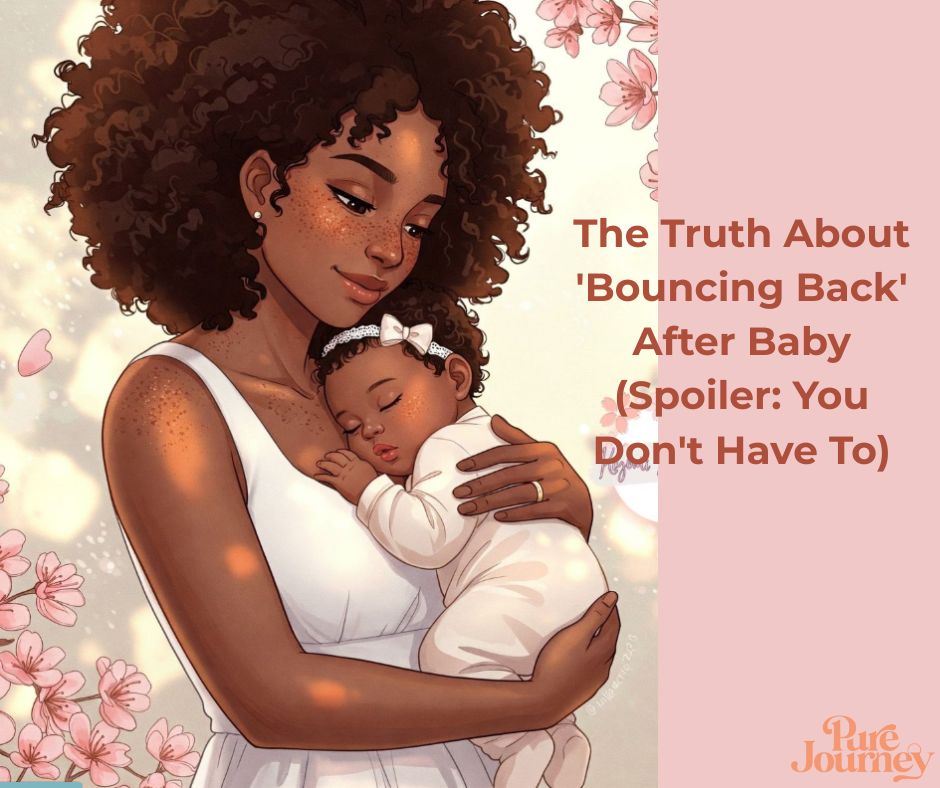
The phrase "bouncing back" after having a baby has become so ingrained in our culture that we rarely question what it actually means. But here's the truth that nobody talks about: you don't have to bounce back. In fact, the very idea that you should return to your pre-pregnancy self is not only unrealistic—it's potentially harmful to your mental and physical wellbeing.
What Does "Bouncing Back" Really Mean?
When we talk about bouncing back after baby, we're usually referring to:
- Losing pregnancy weight quickly
- Returning to pre-pregnancy energy levels
- Getting back to your old routine immediately
- Looking like you never had a baby
- Feeling emotionally "normal" within weeks
But here's what this narrative ignores: you've just grown and birthed a human being. Your body, mind, and life have fundamentally changed, and that's not something you bounce back from—it's something you grow through.
The Myth of the Quick Recovery
Your Body Needs Time
The World Health Organization recommends a minimum of six weeks recovery time after birth, but many experts now suggest it takes closer to a year for your body to fully recover. Consider what your body has accomplished:
- Your ribcage expanded to make room for your growing baby
- Your abdominal muscles separated (diastasis recti affects up to 60% of postpartum women)
- Your pelvic floor stretched and potentially tore
- Your hormone levels are fluctuating dramatically
- You may have had surgery (C-section) or significant tearing
Expecting this incredible machine to "bounce back" in weeks is like expecting a marathon runner to sprint immediately after crossing the finish line.
Your Mind Needs Processing Time
Becoming a mother isn't just a physical transformation—it's a complete identity shift. You're learning to navigate:
- Sleep deprivation that affects cognitive function
- Hormonal changes that impact mood and energy
- The mental load of caring for a dependent human
- Potential postpartum anxiety or depression
- Grief for your pre-baby life (yes, this is normal!)
The Pressure Cooker of Social Media
Social media has amplified the "bounce back" pressure exponentially. We see celebrities in bikinis weeks after birth, influencers in pre-pregnancy jeans, and carefully curated posts that make postpartum life look effortless.
Remember: What you see online is a highlight reel, not reality. Those photos don't show the support teams, the struggles, or the moments of doubt that every new mother experiences.
Reframing Your Postpartum Journey
Instead of Bouncing Back, Think About Moving Forward
Rather than trying to return to who you were, consider embracing who you're becoming. This shift in mindset can be incredibly liberating:
-
Old thinking: "I need to lose this baby weight fast"
-
New thinking: "My body needs nourishment to heal and function"
-
Old thinking: "I should be back to normal by now"
-
New thinking: "I'm adjusting to a new normal, and that takes time"
-
Old thinking: "Other mums seem to have it all together"
-
New thinking: "Every mother's journey is different, and comparison steals joy"
The Fourth Trimester: Your Recovery Period
Many cultures recognize a formal recovery period after birth—often 40 days to three months where new mothers are cared for and expected to rest. This "fourth trimester" acknowledges that:
- Your body needs time to heal
- Your hormones need time to stabilize
- Your family needs time to adjust
- You deserve support, not pressure
What the Fourth Trimester Really Looks Like
Week 1-2: Survival mode. Rest, heal, bond with baby. Week 3-6: Gradual increase in activity, still prioritizing rest. Week 6-12: Slowly finding your rhythm, energy may still fluctuate. Month 3-6: Establishing new routines, energy improving but still variable. Month 6-12: Continued adjustment, hormone levels stabilizing.
Supporting Your Postpartum Recovery
Nutrition for Healing, Not Restriction
Your body needs nutrients to heal, especially if you're breastfeeding. Focus on:
- Protein for tissue repair
- Iron to replenish stores
- Omega-3 fatty acids for brain health
- Complex carbohydrates for sustained energy
Consider supplements specifically designed for postpartum recovery, like our Post Partum Calm Complex, which contains saffron clinically shown to reduce anxiety by up to 70% in 6-8 weeks.
Movement That Honours Your Body
Forget about "getting your body back"—focus on feeling strong and capable:
- Start with gentle walks
- Try postnatal yoga
- Focus on core rehabilitation
- Listen to your body's signals
Mental Health Matters
Up to 20% of new mothers experience postpartum depression or anxiety. Signs include:
- Persistent sadness or mood swings
- Difficulty bonding with baby
- Overwhelming fatigue
- Loss of appetite or overeating
- Feelings of worthlessness or guilt
If you recognize these symptoms, please reach out to your healthcare provider. You deserve support.
The Real "Bounce Back" Success Stories
True postpartum success isn't about fitting into old jeans—it's about:
- Feeling confident in your new body
- Having energy for daily activities
- Enjoying time with your baby
- Maintaining your mental health
- Building a support network
- Setting realistic expectations
Creating Your Own Timeline
Month 1-3: Foundation Phase
- Focus on healing and rest
- Establish feeding routines
- Accept help when offered
- Prioritize sleep when possible
Month 3-6: Adjustment Phase
- Gradually increase activity
- Start thinking about nutrition goals
- Consider gentle exercise
- Address any persistent physical issues
Month 6-12: Growth Phase
- Work toward strength and fitness goals
- Establish sustainable routines
- Address any ongoing mental health needs
- Celebrate your progress
What You Can Control (And What You Can't)
You Can Control:
- Your self-talk and mindset
- The support you seek
- Your nutrition choices
- Your sleep hygiene
- Your boundaries with others
You Can't Control:
- How quickly your body heals
- Hormonal fluctuations
- Other people's opinions
- Your baby's sleep patterns
- Unexpected challenges
The Permission You've Been Waiting For
Here's what you need to hear:
You have permission to take your time. You have permission to ask for help. You have permission to prioritize your wellbeing. You have permission to ignore unsolicited advice. You have permission to feel however you feel. You have permission to not bounce back.
Supporting Other Mothers
If you know a new mother, here's how you can help:
- Offer specific help ("Can I bring dinner Tuesday?")
- Avoid commenting on her appearance
- Share your own struggles honestly
- Respect her choices and timeline
- Check in on her mental health
Products That Actually Support Recovery
At Pure Journey, we believe in supporting mothers through realistic, science-backed nutrition rather than quick fixes:
- Post Partum Calm Complex: Contains clinically-studied saffron to support mood and reduce anxiety
- Post Partum Hair Growth and Repair Oil: Nourishes hair follicles affected by hormonal changes
- Baby Brain Mushroom Coffee: Lion's mane mushrooms to support cognitive function and energy
All our products are vegan, allergen-free, and made without artificial additives—because mothers deserve clean, effective nutrition.
The Bottom Line
You are not broken and don't need fixing. You are not behind schedule because there is no schedule. You are exactly where you need to be in your unique journey.
The pressure to bounce back is a societal construct that serves no one. Instead of bouncing back, consider bouncing forward—into a version of yourself that's wiser, stronger, and more compassionate than before.
Your worth isn't measured by how quickly you recover or how closely you resemble your pre-baby self. It's measured by your courage, your love, and your commitment to both yourself and your family.
Remember: You grew a human. You deserve patience, support, and time to heal. Everything else is just noise.
Frequently Asked Questions
Q: How long should postpartum recovery really take? A: Physical recovery typically takes 6-12 months, while emotional adjustment can take even longer. Every woman's timeline is different, and that's completely normal.
Q: Is it normal to not feel like myself months after having a baby? A: Absolutely. Identity shifts after becoming a mother are profound and normal. Many women report feeling like themselves again around 12-18 months postpartum.
Q: What if I'm struggling with postpartum depression or anxiety? A: Please reach out to your healthcare provider immediately. Postpartum mental health conditions are common, treatable, and nothing to be ashamed of.
Q: How can I respond to people asking when I'll "get my body back"? A: Try: "I'm focusing on feeling healthy and strong" or "My body did something amazing—I'm giving it time to recover."
Q: Should I be concerned if I don't feel bonded with my baby immediately? A: Bonding can take time and doesn't always happen instantly. However, if you're concerned about your feelings toward your baby, discuss this with your healthcare provider.
Ready to support your postpartum journey with science-backed nutrition? Explore our postpartum wellness collection and remember—you deserve products as thoughtful as your approach to motherhood.
